Owens Chimney Systems: Chimney Inspection Services in Cornelius NC

At Owens Chimney Systems, we provide Cornelius homeowners with detailed chimney inspections that help their fireplaces operate as safely and as efficiently as possible. Our team understands how quickly hidden issues can turn into expensive repairs, which is why we take a thorough, methodical approach every time we’re called out. Whether your home is newer construction or one of the classic lake-area properties the community is known for, we’re here to keep your chimney performing at its best year after year.

What Does a Chimney Inspection Include?

A chimney inspection is designed to catch problems early and verify that your system is venting as intended. When we inspect a chimney, we evaluate the exterior structure, flue interior, masonry, chimney cap, flashing, smoke chamber, and all accessible components. We look for damage, deterioration, creosote buildup, blockages, water entry, drafting problems, and anything that might pose a risk during fireplace use.

We also address unique questions we hear from Cornelius homeowners. How do chimneys hold up during high winds coming off Lake Norman? Can a single missed inspection allow creosote to accumulate enough to ignite the following season? How can a sweep detect microscopic cracks in a clay or stainless liner? During our visit, we walk you through anything we find so you know exactly how your system is performing and what next steps might help protect your home.
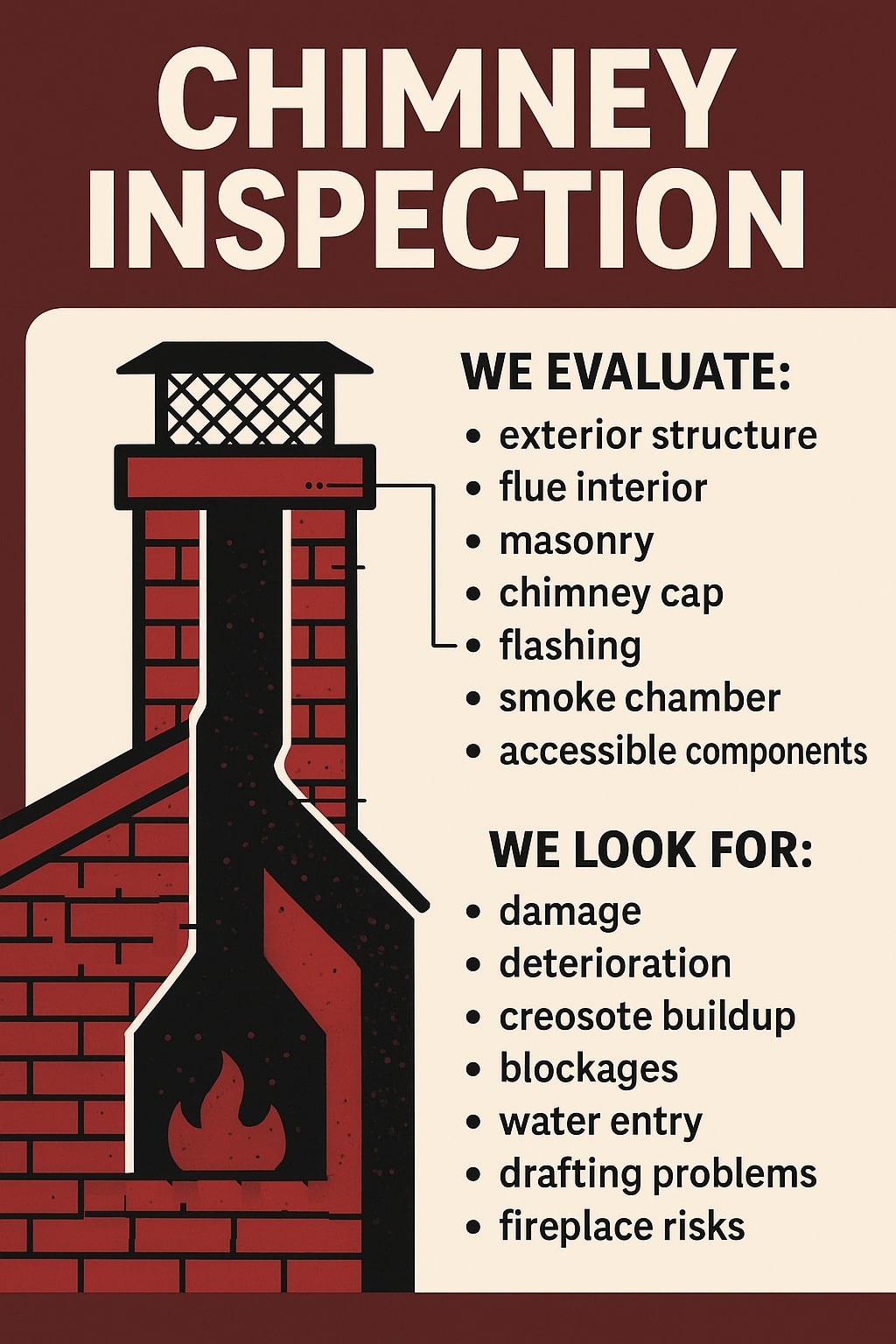
original infographic shows a tall, rectangular chimney illustration on the left in shades of deep red, black, and cream, with brick textures and a cutaway view revealing the flue and a small stylized flame at the bottom; the chimney cap is depicted with a black roof and mesh screen, while the background is split horizontally with a dark red top section and a cream lower section; large bold cream text at the top reads “CHIMNEY INSPECTION,” and to the right of the chimney are two bold headers in black text, “WE EVALUATE:” and “WE LOOK FOR:,” each followed by black bullet-point lists including items such as exterior structure, flue interior, masonry, chimney cap, flashing, smoke chamber, accessible components, damage, deterioration, creosote buildup, blockages, water entry, drafting problems, and fireplace risks, all arranged cleanly with strong contrast and simple, flat graphic design.

About Cornelius NC: We’d Love To Serve You Soon

Cornelius is a lakefront community that combines access to the water with charming neighborhoods, local eateries, and plenty of outdoor recreation. Ramsey Creek Park offers swimming, boating, and shaded picnic areas, while Jetton Park provides miles of trails and beautiful views of Lake Norman. Residents also enjoy the historic sites and small-town feel near Main Street. It’s a place where people value comfort, quality time at home, and inviting living spaces, all of which makes a dependable fireplace system even more important.

How Do Strong Storms Affect a Chimney, and Should I Schedule an Inspection After One?

High winds, lightning, and heavy rain can all stress a chimney system, even if the damage isn’t immediately visible. In Cornelius, storms that sweep across Lake Norman often generate gusts that rattle chimney caps, shift flashing, loosen bricks, or even knock debris into the flue. If your chimney is older or already has worn mortar joints, these conditions accelerate deterioration.

After a severe storm, we recommend an inspection because the earlier structural shifts or moisture intrusion are caught, the easier they are to correct. For example, high-wind events can tilt a chimney just enough to compromise its stability, and repeated pressure on a worn crown can lead to fractures that let water in. Rain-driven leaks may show up later as staining on ceilings, a rusted damper, or shallow puddles in the firebox.

We also pay special attention to how storms affect drafting. Even something as simple as a dislodged cap screen or storm debris lodged near the top can impede airflow. That blockage doesn’t have to be large to alter how smoke rises. This is especially important for gas fireplaces because a blocked or partially obstructed chimney can expose homeowners to carbon monoxide.

Storm vibration can also contribute to microscopic liner cracks. These cracks aren’t visible without specialized camera equipment, but they can create gaps where heat moves into surrounding materials. This is one reason our level 2 inspections include a video scan. It allows us to identify early-stage compromises that an untrained eye might miss.

Whether you’ve recently experienced a hurricane remnant, a strong thunderstorm, or high winds, a post-storm inspection helps ensure your system is performing as it should before you light your next fire.

How Do Freeze/Thaw Cycles & Moisture Affect Chimney Deterioration?

Cornelius winters may be milder than those in the mountains, but freeze thaw cycles still affect brick and mortar. Masonry is porous, so moisture seeps in during rain or humid conditions. When temperatures drop, that moisture expands and puts pressure on the material. Over time, this contributes to cracking, flaking, spalling, and the gradual loss of mortar integrity.

Water also affects metal components. Damp conditions can encourage rust on the damper, chase cover, cap, and interior parts of the firebox. Rust isn’t just a cosmetic issue because it signals active moisture exposure that might lead to further damage.

Water intrusion is one of the most common problems we find during inspections. Sometimes it starts as something subtle like efflorescence on the exterior brick or a musty odor after a rain. Other times it creates serious deterioration inside the flue that reduces the stability of the liner or allows gaps to develop.

A good inspection identifies the source of moisture, whether it’s damaged flashing, a cracked crown, a missing cap, or deteriorated mortar joints. Once the problem is diagnosed, we can recommend waterproofing, tuckpointing, crown repair, or other solutions that slow deterioration and help your chimney handle seasonal weather changes more effectively.

Can Hidden Issues Inside the Chimney Really Cause Major Problems in Just One Season?

Yes, especially when conditions support rapid deterioration. Creosote accumulation, water intrusion, animal nesting, and structural shifting can all escalate quickly if they go unchecked. For example, burning wood with high moisture content can accelerate creosote buildup, and if that buildup becomes thick enough, it raises the risk of a flue fire. Even one season of heavy use is enough for this buildup to become significant.

Moisture is another fast-moving threat. If water is leaking into the chimney every time it rains, mortar can wash out, bricks may crumble, and metal components start rusting. Small leaks aren’t always obvious to homeowners because the first signs tend to be minimal: a faint smell, a little discoloration, or increased smoke movement. We often detect these early clues during routine inspections.

Animal nesting can also generate problems quickly. Birds, squirrels, and raccoons like to build nests in warm, sheltered places. Even if they’ve left by the time you use the fireplace again, nesting debris can clog the flue enough to cause drafting issues, smoke backup, or even carbon monoxide exposure in gas systems.

A seasonal inspection helps ensure none of these fast-developing issues go unnoticed.

What Are Early Warning Signs That a Chimney Needs Attention?

We encourage Cornelius homeowners to call us if they notice any of these warning signs between inspections:

• Crumbling or missing mortar
• Spalling or flaking bricks
• Rust on the damper or inside the firebox
• Water stains on ceilings or walls
• Persistent smoky odors
• Difficulty getting a strong draft
• A chimney that appears to lean or shift
• White staining on masonry
• Debris falling into the fireplace

Many of these symptoms indicate moisture exposure, structural stress, or internal blockages. Even if they seem minor, they usually point to early-stage problems that can develop into costly repairs.

An inspection helps verify the cause and pinpoint what needs correction, whether it’s chimney cleaning, tuckpointing, crown repair, cap replacement, or a structural evaluation. If we find any evidence that your chimney’s stability is compromised, we walk you through the recommended repair plan and explain how to keep the system functioning as safely and as efficiently as possible.

Can Construction Changes or New Landscaping Affect Chimney Drafting?

Absolutely. Draft depends on airflow, chimney height, and surrounding structures. When a nearby home is remodeled, a second story is added, or large trees grow taller near the roofline, airflow patterns can shift. Even adjustments to your own home, such as a new roof pitch or an addition, may influence how smoke rises.

Sometimes the homeowner doesn’t connect these changes to fireplace performance, but we see it all the time. What once drafted well can suddenly struggle due to altered pressure zones or turbulence near the flue opening. An inspection helps us evaluate these external factors and recommend solutions. Sometimes extending the chimney height, adjusting the cap style, or improving air supply inside the home corrects the issue.

We also consider indoor pressure. Kitchens, bathrooms, and laundry rooms with strong exhaust fans can create negative pressure that pulls smoke back into the home. During inspections, we test for these conditions so your system drafts as intended.

Schedule Your Chimney Inspection in Cornelius NC

Our team at Owens Chimney Systems is committed to keeping Cornelius homes warm, comfortable, and worry free. If it’s been more than a year since your last chimney inspection, or if you’ve noticed anything unusual with your fireplace, now is the time to reach out. Contact us today and let us help you enjoy your fireplace with greater confidence this season.